Ténéréite (primitive)* or Tafassite Clan
(CR6 in MetBull 102)
click on photo for a magnified view
Purchased June 2012
no coordinates recorded
A single meteorite weighing 1,096 g was purchased in Morocco by T. Jakubowski and M. Cimala of PolandMet. The stone was analyzed at the University of Washington in Seattle (A. Irving) and NWA 7317 was classified as a recrystallized, texturally evolved CR6 chondrite likely paired with NWA 2994 (4,756 g), NWA 3250 (916 g), NWA 6901 (1,197 g), NWA 6921 (1,749 g), and NWA 8548 (244.8 g) (T. Bunch and J. Wittke, NAU; A. Irving, UWS; C. Agee, UNM). See also a photo of two whole stones exhibited in the Encyclopedia of Meteorites by Marcin Cimala. More recently, the ungrouped achondrite NWA 11112 (528 g, photo courtesy of Kai Ke) and the primitive achondrite NWA 12869 (4,300 g) have been analyzed and are presumed to be related to this pairing group. As with NWA 3100, NWA 7317 and pairings contain evidence of relict barred chondrules in thin section, logically disqualifying it as a primitive achondrite and not meeting the requisite advanced degree of thermal metamorphism to be termed a type 7 or metachondrite; notably, Tomkins et al. (2020) did identify some type 7 breccia fragments in their study sample.
*Previously, Floss (2000) and Patzer et al. (2003 #1352, 2004) proposed that the acapulcoite/lodranite meteorites should be divided based on metamorphic stage:
primitive acapulcoites: near-chondritic (Se >12–13 ppm [degree of sulfide extraction])
typical acapulcoites: Fe–Ni–FeS melting and some loss of sulfide (Se ~5–12 ppm)
transitional acapulcoites: sulfide depletion and some loss of plagioclase (Se <5 ppm)
lodranites: sulfide, metal, and plagioclase depletion (K <200 ppm [degree of plagioclase extraction])
enriched acapulcoites (addition of feldspar-rich melt component)
A similar distinction could be made among the winonaites in our collections, as well as among members of the newly proposed group ténéréites (Agee et al., 2020). One of the most "primitive" members identified in this new group is NWA 7317, which contains relict chondrules comparable to a petrologic type 6 chondrite. However, most ténéréites have experienced more extensive thermal metamorphism involving incipient melting and now exhibit highly recrystallized textures, characteristics analogous to the "typical" acapulcoites. Metamorphic progression in other ténéréites involved higher degrees of partial melting and even separation of a basaltic fraction (e.g., NWA 011 pairing group). Samples representing such an advanced metamorphic stage are known as lodranites in the acapulcoite/lodranite metamorphic sequence, while the term "evolved" could be used to represent a similar metamorphic stage in the ténéréite group.
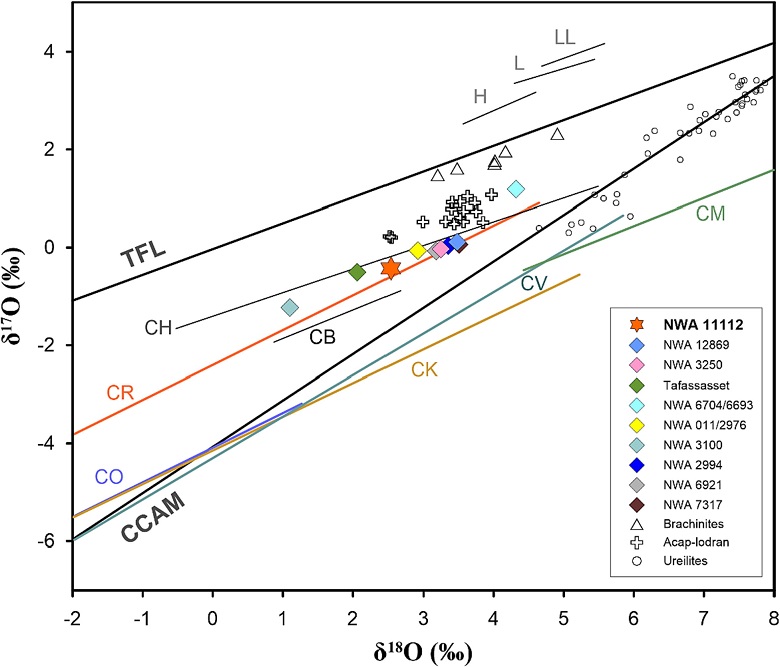
This meteorite has been very weakly shocked (S2) and has experienced very minor terrestrial weathering (W0/1). The oxygen isotopic composition for NWA 7317 was determined at the Carnegie Institution in Washington DC (D. Rumble, III; CR chondrite comparison plot), while that of NWA 3250 CR chondrite comparison plot) was previously determined at the Open University, UK (I. Franchi and R. Greenwood; Δ17O = –1.72). Including the plot for NWA 3100 (University of Western Ontario; T. Larson and F. Longstaffe), all of these meteorites fall within the field of the CR chondrites. In addition, the meteorites Tafassasset and LEW 88763 are also geochemically and isotopically consistent with a CR-like parent body and have experienced a high degree of thermal metamorphism and recrystallization. Considering that relict chondrules have also been reported in samples from each of these texturally-evolved meteorites, and with NomCom (Meteoritical Society Committee on Meteorite Nomenclature) presently lacking a type 8 category, they would perhaps be more appropriately designated CR6. However, if the metamorphic continuum were to include type 8 as a completely recrystallized end point as proposed by Irving et al. (2019 #6399), then a type 7 designation for all of these meteorites would be appropriate.
A cooperative study was undertaken of a number of previously ungrouped achondrites, primitive achondrites, and silicated irons which have O-isotopic compositions that plot along the CR oxygen isotope trend line (Bunch et al., 2005—Northern Arizona University, University of Washington, and University of Western Ontario). From the meteorites that were studied, including NWA 3100, NWA 801, Tafassasset, NWA 011 pairing group, LEW 88763, Sombrerete, and NWA 468, it was suggested that some or all of them may have originated in the core, mantle, crust, and chondritic regolith of a large, at least partially differentiated CR-type parent body that was subsequently collisionally disaggregated.
click on image for a magnified view
Diagram credit: Bunch et al., 36th LPSC, #2308 (2005)
'"Primitive" And Igneous Achondrites Related To The Large And Differentiated
CR Parent Body'
click on image for a magnified view
Diagram credit: Wittke et al., 74th MetSoc, #5222 (2011)
'Northwest Africa 5131: Another Tafassasset-Like Metachondrite Related To The CR Chondrite Parent Body'
Continued research on this front has been ongoing (e.g., Bunch et al., 2005; Floss et al., 2005, [MAPS vol. 40, #3]; Irving et al., 2014 [#2465]; Sanborn et al., 2014 [#2032]). As provided in the Sanborn et al. (2014) abstract, a coupled Δ17O vs. ε54Cr diagram is one of the best diagnostic tools for determining genetic relationships among meteorites. Moreover, Sanborn et al. (2015) demonstrated that ε54Cr values are not affected by aqueous alteration. The diagrams below include the NWA 7317 pairings NWA 6901, 6921, and NWA 2994, and it is apparent that they plot within the CR chondrite field.
Diagram credit: Sanborn et al., 45th LPSC, #2032 (2014)
17O vs. ε54Cr and ε50Ti for CR-like Achondrites
click on image for a magnified view
Diagrams credit: Sanborn et al., GCA, vol. 245, pp. 577–596 (2019)
'Carbonaceous Achondrites Northwest Africa 6704/6693: Milestones for Early Solar System Chronology and Genealogy' (https://doi.org/10.1016/j.gca.2018.10.004)
However, results of a study of the paired meteorite NWA 6901 conducted by J. Zipfel (2014, #5346) led to a different conclusion. He determined that despite having similar oxygen and chromium isotopic values, this meteorite has a major element composition that is inconsistent with a derivation from a CR-like source. He suggests that the infiltration of a trace element-rich melt phase similar to that of the phosphates present in the ungrouped achondrite NWA 011 could explain the trace element abundance pattern of NWA 6901. These two meteorites also plot near each other on a coupled Δ17O vs. ε54Cr diagram (see above), and therefore he suggests these meteorites may be related.
It was asserted by Agee et al. (2020) that the similarity in O, Cr, and Ti values among the CR2 carbonaceous chondrites and these ungrouped equilibrated meteorites is coincidental, and that significant geochemical differences (e.g., olivine Fa content and Fe/Mn) and other discrepancies (e.g., petrologic type discontinuity) exist that make a common parent body untenable. They contend that the thermally metamorphosed CC meteorites represent a unique group for which they propose the name 'ténéréites' (see list and diagrams below).
Diagram credit: Agee et al., 51st LPSC, #2292 (2020)
'Northwest Africa 12869: Primitive Achondrite From the CR2 Parent Body or Member of a New Meteorite Group?'
Diagram credit: Dr. Carl Agee, IOM Seminar Sept 1, 2020
'Dr. Carl Agee: Some New Meteorites from the Sahara Desert'
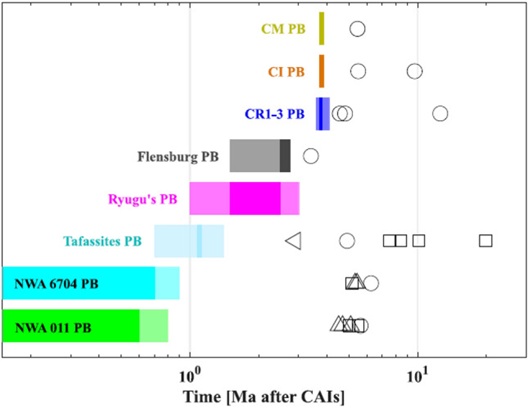
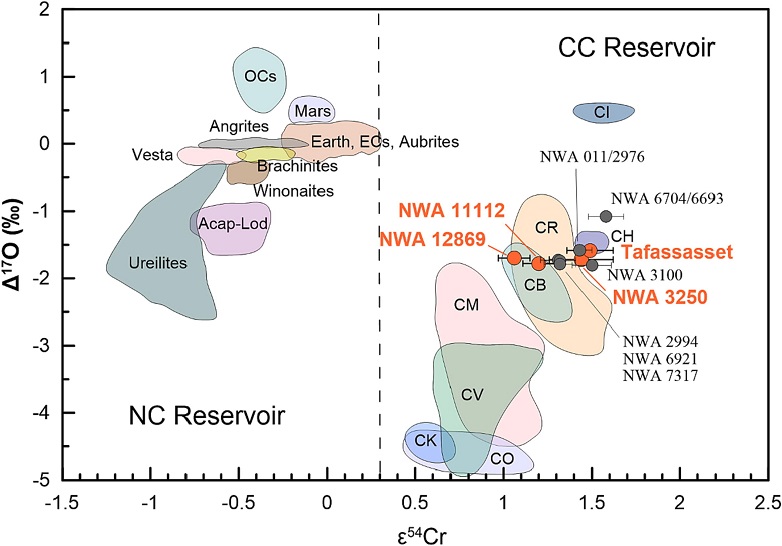
Ma et al. (2021, 2022) and Neumann et al. (2021) investigated the suite of ténéréites, for which they proposed the name 'tafassites'. They employed numerical modeling to constrain the formation and thermal history of the parent body, which they found was most consistent with an accretion age of 0.9 (±0.1) m.y. after CAIs—significantly earlier than that of the CR chondrite parent body at 3–4 m.y. after CAIs. In addition, they determined the diameter of the tafassite parent body to be 200–400 km. Moreover, based on stable isotope systematics and the distinct accretion ages obtained for the NWA 011 and NWA 6704 grouplets of 1.5 and 1.7 m.y. after CAIs, respectively, they argued that these meteorites derive from one or more additional parent bodies associated with a common reservoir (see top diagrams below). At the other end of the lumping–splitting spectrum, Jiang et al. (2021) contend that the CR parent body once comprised all of the meteorites that are isotopically and geochemically similar, composing a now disaggregated, at least partially differentiated body with a metallic core, achondritic mantle, and chondritic crust (see schematic illustration below).
ε54Cr vs. Δ17O for Tafassites and the NWA 011 and NWA 6704 grouplets
click on image for a magnified view
Diagrams credit: Ma et al., Geochemical Perspectives Letters, vol. 23, pp. 33–37, fig. S-13 (2022 open accesslink)
'Early formation of primitive achondrites in an outer region of the protoplanetary disc'
(https://doi.org/10.7185/geochemlet.2234)
Accretion Times for CC Reservoir Parent Bodies
Diagram credit: Neumann et al., Nature Scientific Reports, vol. 14, art. 14017, fig. 3 (2024 open accesslink)
'Recurrent planetesimal formation in an outer part of the early solar system'
(https://doi.org/10.1038/s41598-024-63768-4)
Schematic Diagram of a Partially Differentiated CR Parent Body
Schematic illustration credit: Jiang et al., 84th MetSoc, #6062 (2021)
A more comprehensive investigation of the suite of four ungrouped primitive achondrites (NWA 3250, NWA 11112, NWA 12869, and Tafassasset) was undertaken by Jiang et al (2023) with an expanded team having relevant expertise in Cr and O isotope systematics, Mn–Cr chronometry, nucleosynthetic anomalous isotopes, and geothermometry. Employing advanced petrographic and mineralogical techniques, including high resolution X-ray tomographic microscopy, their analyses led to the conclusion that NWA 3250, NWA 11112, and NWA 12869 compose a grouplet of primitive achondrites that derive from a small parent body (tens of km in diameter) which accreted very early (<1 m.y. after CAIs) from a nebular reservoir that would later produce the CR chondrite parent body. Importantly, they determined that Tafassasset should be removed from inclusion in this grouplet due to significant mineralogical differences in comparison with the other three members (see diagrams below). Therefore, a potential 'tafassite clan' comprised of up to 4 parent bodies, each of which formed early in the CR reservoir, may be represented in our collections as (1) Tafassasset grouplet, (2) Jiang et al. grouplet, (3) NWA 011 basalt grouplet, and (4) NWA 6704 orthopyroxene grouplet.
Triple Oxygen Isotopes for CR-like Primitive Achondrites
click on image for a magnified view
ε54Cr vs. Δ17O for CR-like Primitive Achondrites
click on image for a magnified view
Diagrams credit: Jiang et al., GCA, vol. 345, pp. 1–15 (2023)
'Tracking and dating incipient melting of a new grouplet of primitive achondrites'
(https://doi.org/10.1016/j.gca.2023.01.022)
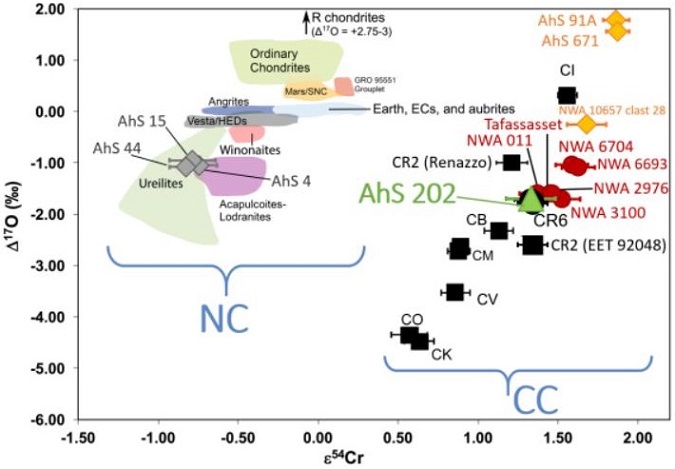
Miller et al. (2021) utilized a coupled ε54Cr vs. Δ17O diagram (see diagram below) to determine the genetic provenance of the ungrouped carbonaceous chondrite AhS 202, which was found as a xenolithic clast in the Almahata Sitta polymict ureilite. Based on its plot, AhS 202 could represent the unmelted chondritic lid surrounding a Ceres-sized (~640–1,800 km-diameter as indicated by evident prograde metamorphism involving the amphibole tremolite [Hamilton et al., 2020; Hamilton et al., 2021; Dodds et al., 2022 {#2158}]) differentiated asteroid, possibly associated with the early-formed (i.e., prior to CR chondrule formation at ~3.8 m.y. after CAIs) ténéréite group (Agee et al., 2020). Alternatively, AhS 202 may derive from an asteroid that formed in the CR reservoir and was previously unrepresented in our collections. Interestingly, the tremolite-bearing C1-ung chondrite MIL 090292 may be a second sample from the same parent body (Hamilton and Goodrich, 2023 #6137).
ε54Cr vs. Δ17O Diagram for AhS 202
click on image for a magnified view
Diagram credit: Miller et al., 52nd LPSC, #2360 (2021)
'Stalking a Large Carbonaceous Chondrite Asteroid Using ε54Cr–Δ17O Isotope Systematics of the Unique Xenolith Almahata Sitta 202'
A noble gas study was conducted by Miura and Okazaki (2019) for the paired NWA 3250. They determined an average CRE age of 34 m.y. based on 21Ne, with the assumption that heavy shielding conditions existed in the meteoroid. In addition, utilizing Pu–Xe chronometry for NWA 3250, they calculated an absolute crystallization age relative to Angra dos Reis (4.5578 b.y.) that is 107 (±24) m.y. older.
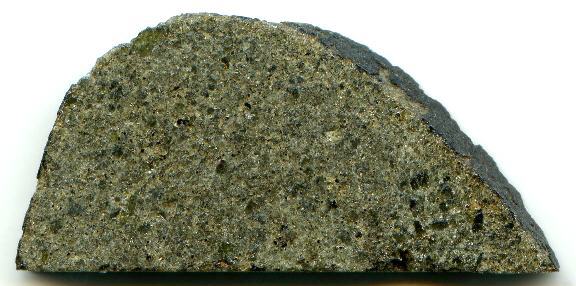
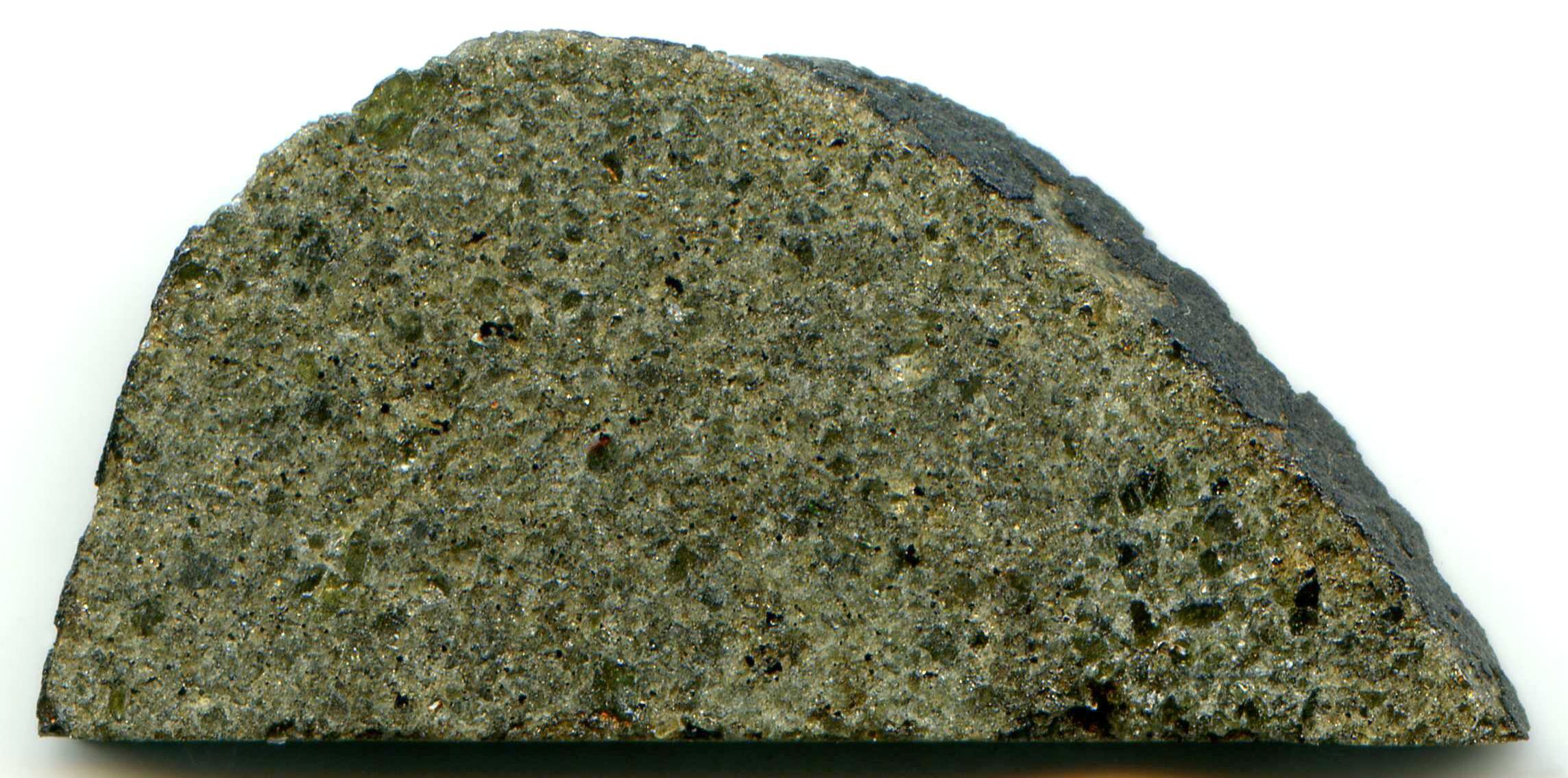
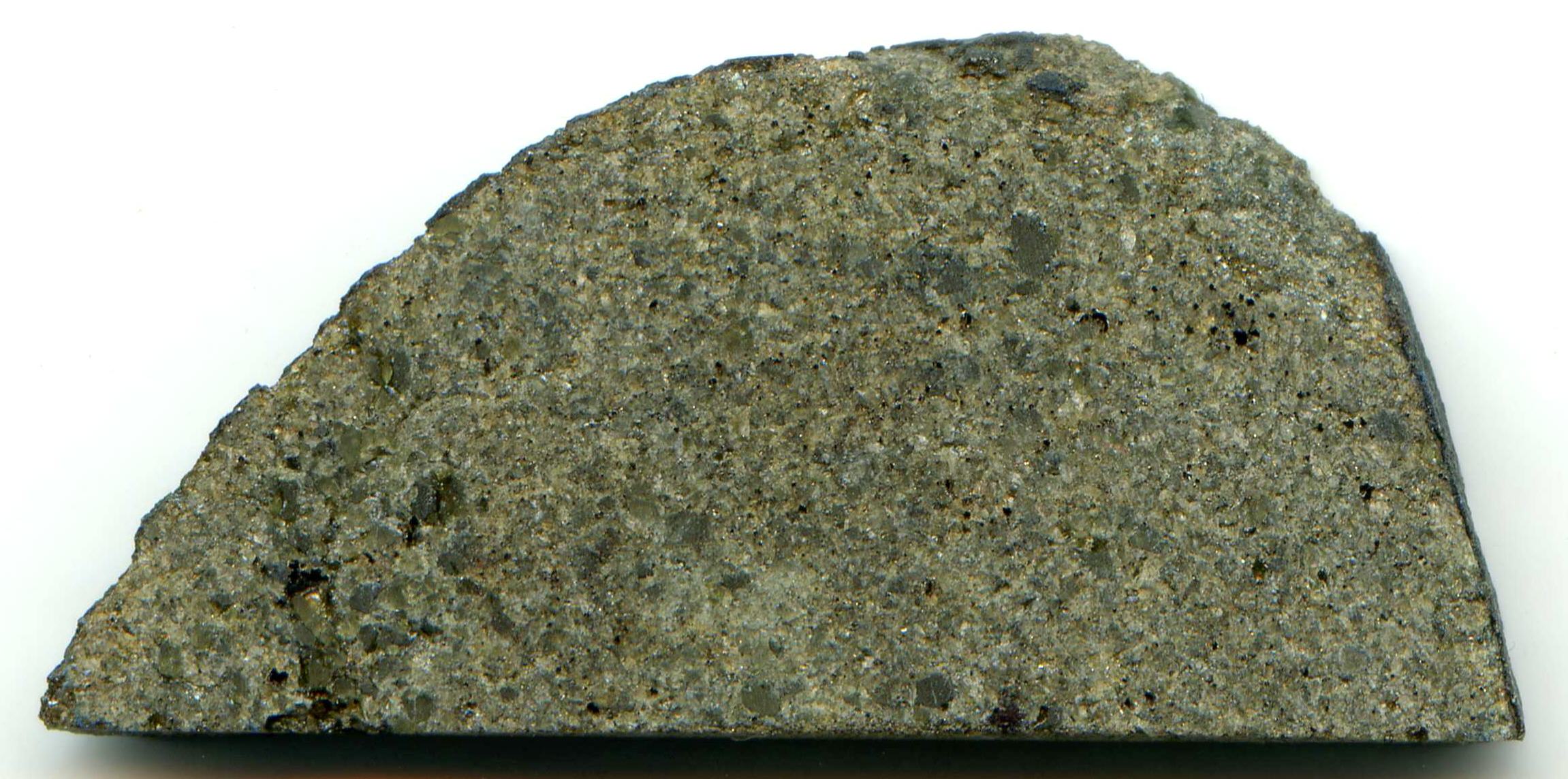
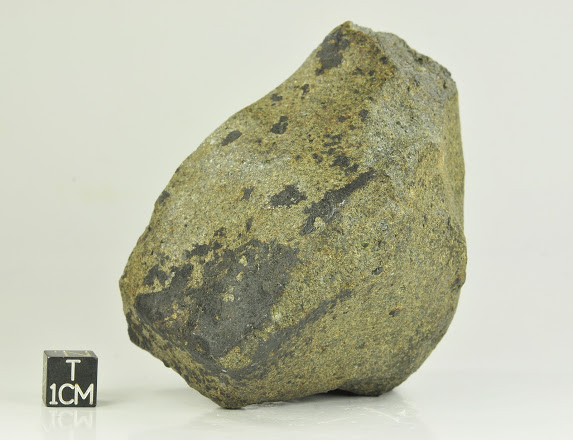
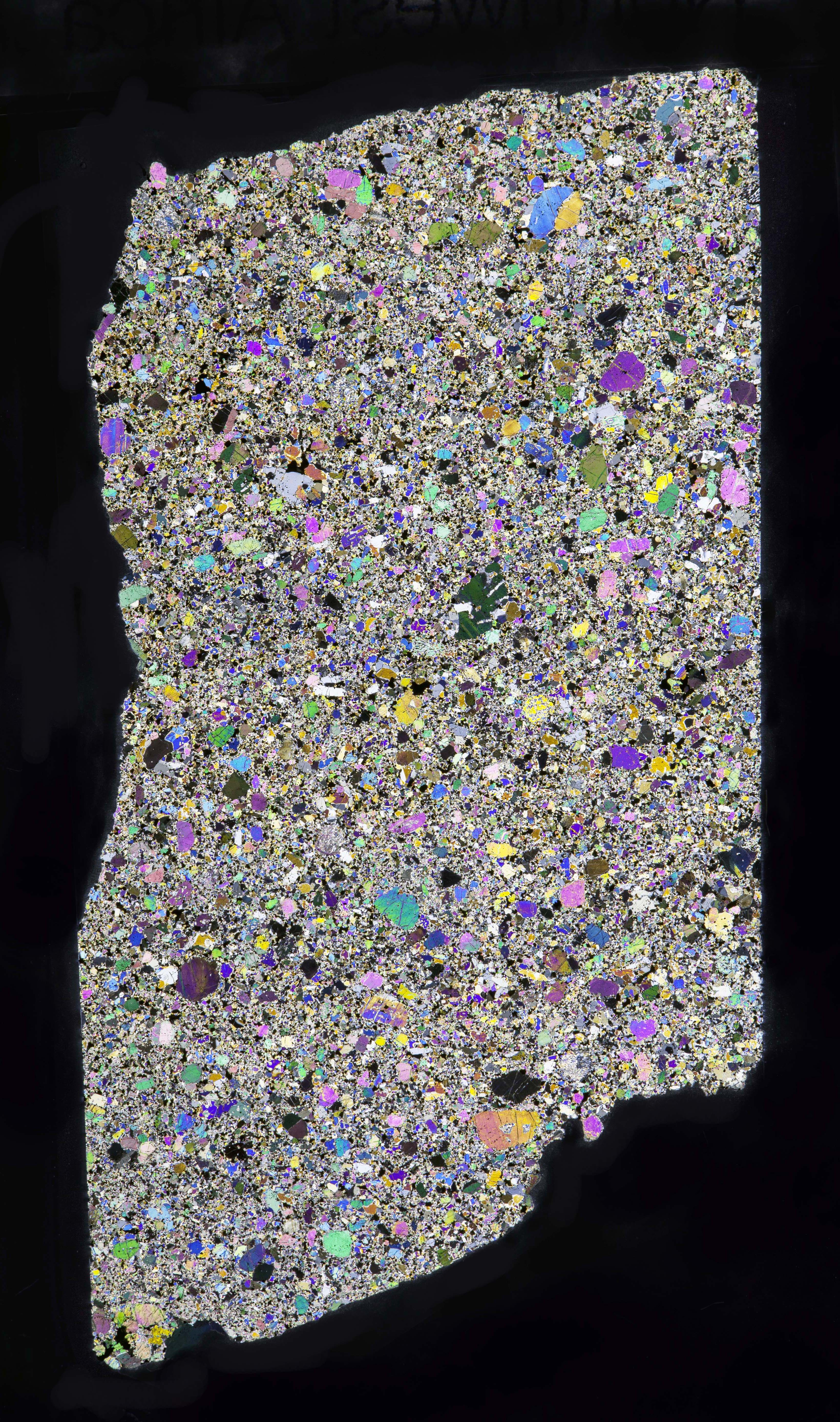
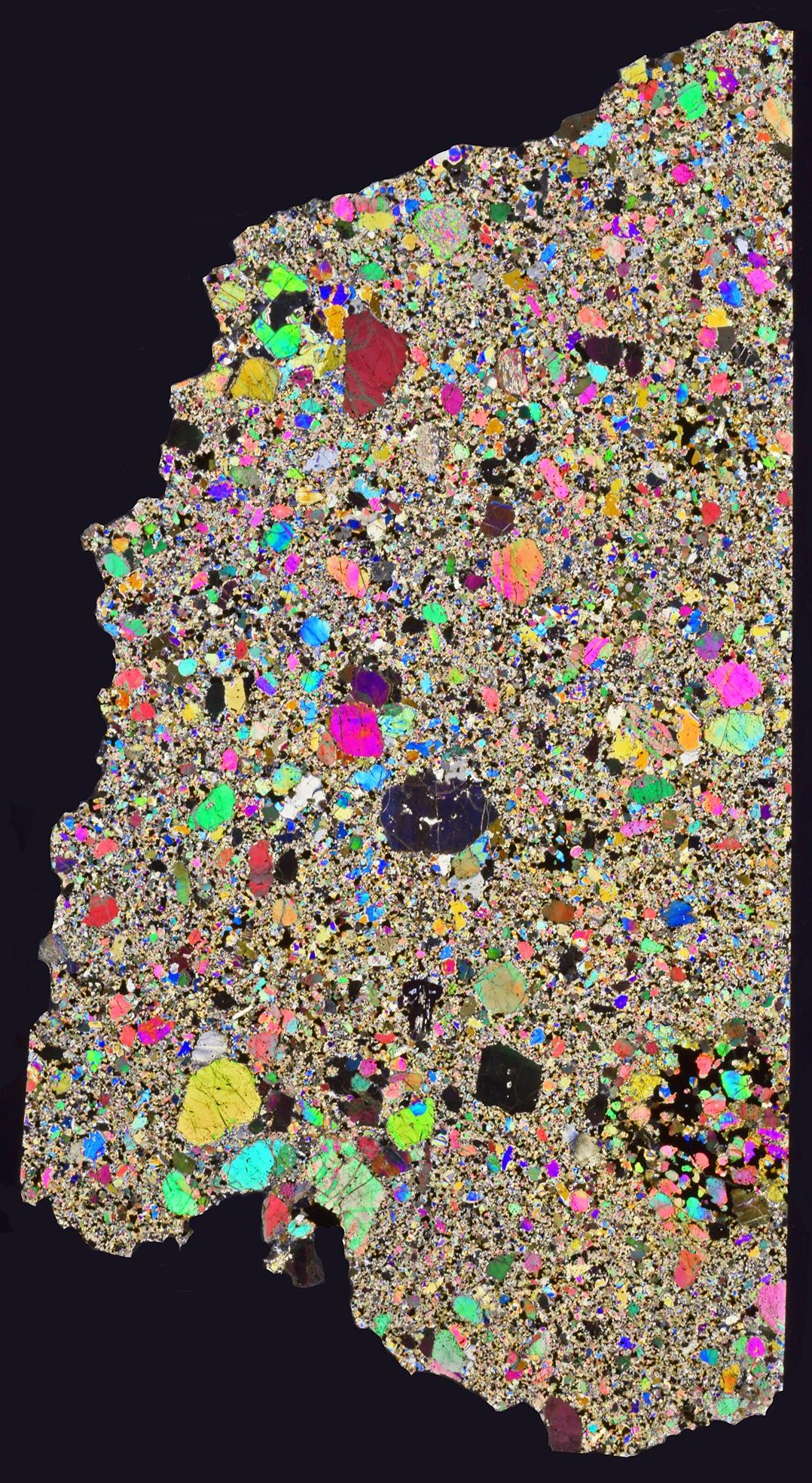
The specimen of NWA 7317 shown above and in the top photo below is a 3.07 g partial slice. The photos at the bottom show the main mass and two petrographic thin section micrographs of NWA 7317 shown courtesy of Peter Marmet. The thin section on the right contains a rare relict chondrule near the top of the image.
click on photo for a magnified view
Photo courtesy of Tomasz Jakubowski
click on photos for a magnified view
Photos courtesy of Peter Marmet